





Details
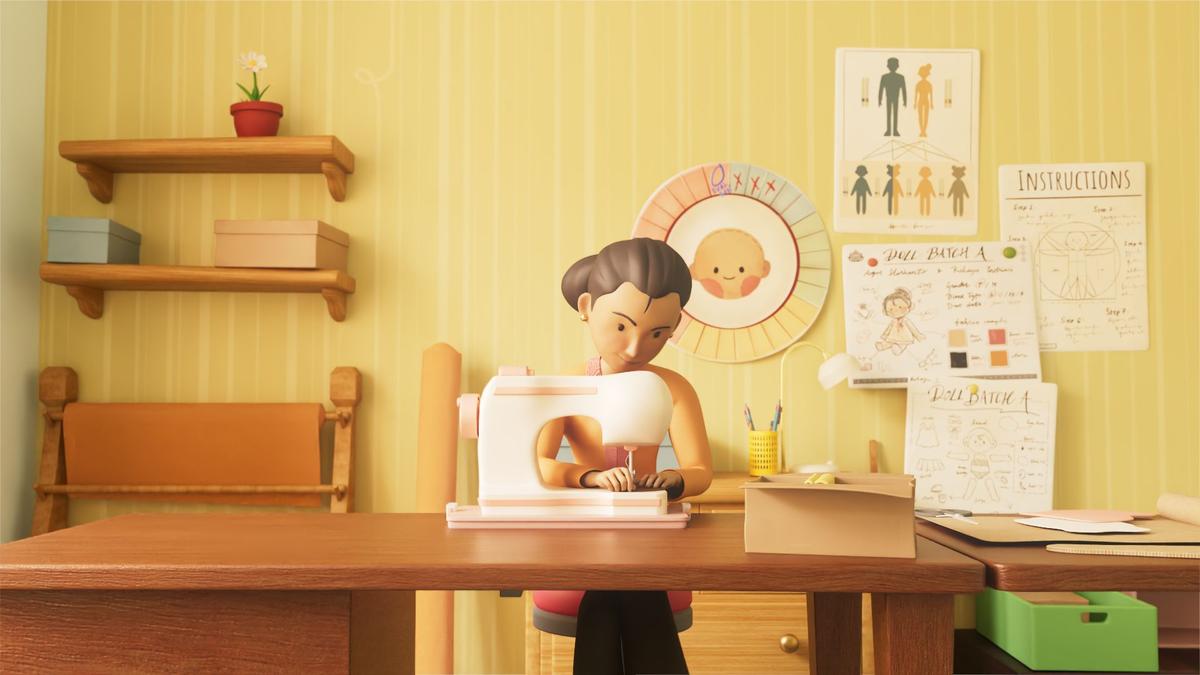
A young woman starts working in a company where she is expected to make a doll, but she struggles to meet this demand because her sewing machine keeps breaking down during her work.
Trivia
The word “sewer” here mainly serves as the word referring to one that sews. “Sewer” also refers to an artificial, usually subterranean conduit, to carry off sewage and sometimes surface water (Merriam-Webster, n.d.). We use this dual meaning of this homograph to encapsulate the story of a woman who works by sewing and the same woman who ends up being thrown into a sewer for the predicament that bears.
Director's Statement
The overall picture of the story came almost immediately to me with a single phrase that popped into my head: baby factory. I decided to tell a story about marriage and fertility issues, around that time having just recently finished a book about women's struggles in careers and families. I wanted to focus on how women are still prone to be put on the front line for blame when a couple cannot produce a child. I was perplexed when I realized how much this issue persisted in many parts of society, mostly hidden under the protective blanket of tradition. Even lightly tossed around in easy conversations between my parents in my house. We came up with the concept of using a corporate environment to symbolize a social framework consisting of several families where a baby has to come for it to be deemed successful. We wanted this film to depict what an absurd social construct it is by equating it to how corporations obsess over productivity. We put a lot of little clues in design choices to direct the audience to the issues we try to represent within this film. I hope the audience will have a bit of a puzzle-solving experience as the film unfolds.


